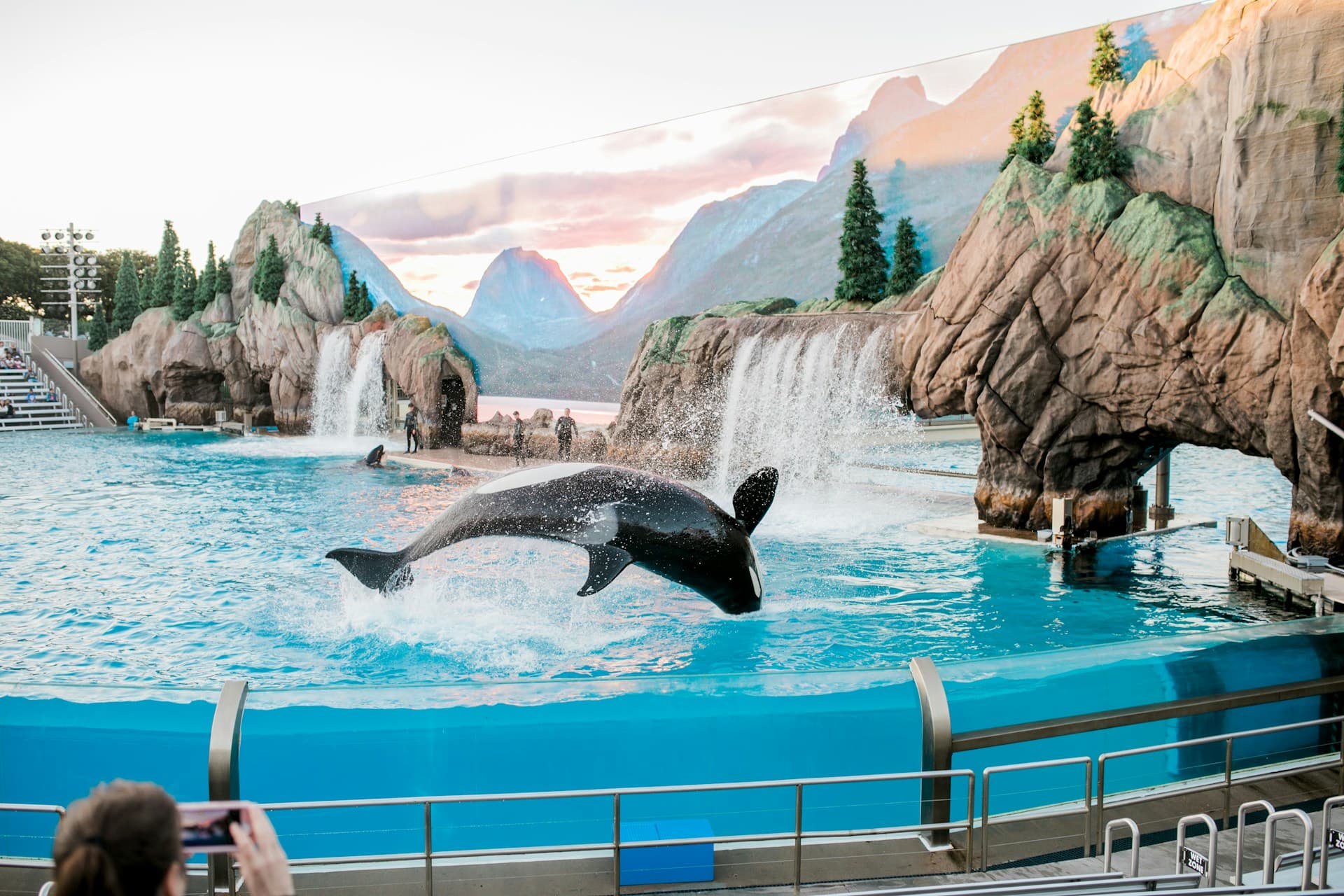
SAN DIEGO, CALIFORNIA – SeaWorld Public Relations Manager Chuck Cureau addressed a pool of journalists and activists on Wednesday, speaking on the future of its highly controversial captive orcas.
“We have been listening to what SeaWorld fans, marine biologists, and activists are saying about our orca program, and we have made a landmark decision to discontinue it,” said Cureau to a wave of applause and cheers. “The animals will be retired as we implement our next exhibit in their place.
“Corky II, Ulises, Katina, and the rest will be released into the wild this June after they have completed their contracts. We’ll be spending the time in between now and then teaching them real-world skills, like hunting and filing taxes,” he continued. “Until then, we’re offering free, promotional laminated apology cards to any child under the age of 12 that visits a SeaWorld location to watch an orca show.”
“As for what’s next, I can say that it will ‘blue’ your mind!” he added, before exiting the stage. We were able to catch up with him after he answered additional questions.
When asked what’s next for the orca exhibit, he responded simply: “Blue whales.”
We asked how they intend to fit the largest animal ever into a park. Cureau explained that SeaWorld plans to expand the orca enclosure by nearly 60%, so the new whales can have plenty of space to swim in a “near-exact replica” of the whales’ natural environment.
When a journalist following Cureau asked if SeaWorld thinks this is an improvement over orcas, Cureau said, “Of course. Our researchers have been using our proprietary AI, ChatGPSea, to catalogue millions of recorded blue whale vocalizations, to the point that we can more or less understand how to speak with them. Based on those interactions, we believe they have entered into a verbal agreement to be our new headliners at SeaWorld San Diego. This communication also allows us to more clearly express the consequences of failing to entertain our audiences.”
Another journalist asked how they plan to transport animals weighing up to 200 tons.
“We’ve been able to determine which blue whales are young adults old enough to consent to our contract, but not yet fully grown, and more easily transported,” Cureau said. “The key is our usage of targeted sonar guidance to encourage them voluntarily into our enclosures, without resorting to mechanical restraints.”
We asked if the blue whales would be expected to do tricks, and Cureau did not hesitate.
“Of course they will be expected to perform,” he said. “While we’re still evaluating the scope of their capabilities, they will be required to meet performance metrics as laid out in their contracts. We’re investing upwards of $1 billion to ensure they have a tank depth exceeding 1,000 feet. The circumference will remain largely unchanged, but this will require an enormous vertical expansion to our facilities. We’re also coordinating the weekly import of thousands of tons of krill for a full roster of eight whales. We will uphold our end of the contract.”
After speaking with Cureau, we had a chance to speak with a representative from PETA.
“I honestly don’t know what to think,” she said. “These are highly intelligent animals, but at least they’re freeing the orcas. I don’t even understand how they think this is possible.”
SeaWorld encourages guests to visit the orca exhibit by June 1st to receive an official laminated apology card.